| Parameter | Value |
|---|---|
| Total Proteins | 3,194 |
| Reviewed Proteins | 2,824 |
| Unreviewed Proteins | 370 |
| Total Residues | 1,879,280 |
| Total IDRs | 4,647 |
| Total Disorder Residues | 330,837 |
| Proteins with Structures | 2,767 |
| Total PDB Structures | 39,736 |
| Taxonomic Groups | 6 Kingdoms |
| Virus Hosts | 141 |
| Source Organisms | 352 |
| Proteins with Interactions | 1,893 |
ProDI-DB statistics
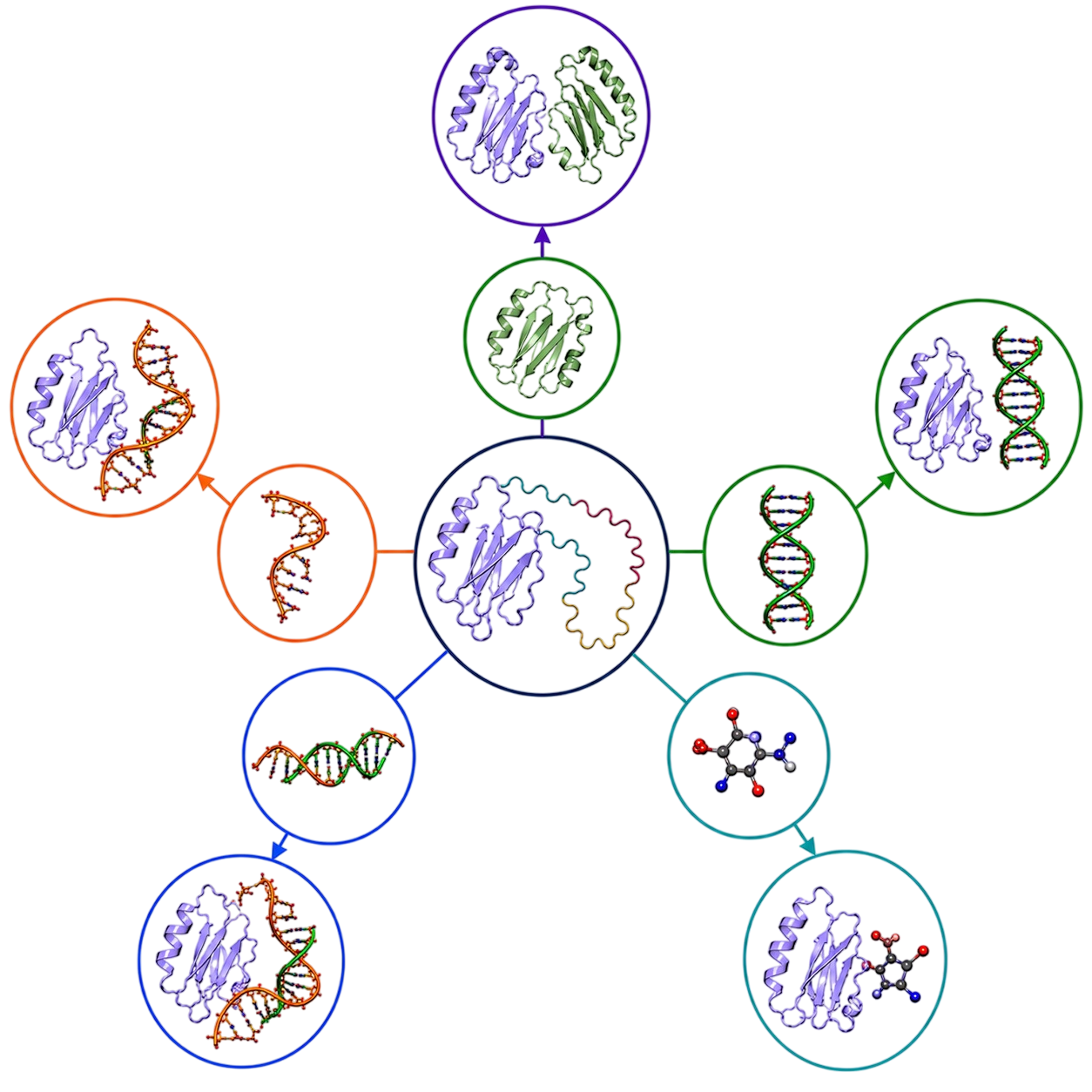
This page provides an overview of the content and information provided in ProDI-DB, including curated IDPs, annotated properties of IDPs and IDRs, their taxonomic distribution, structural annotations, experimental methods, and interaction information.
Overview
1
Taxonomic Distribution
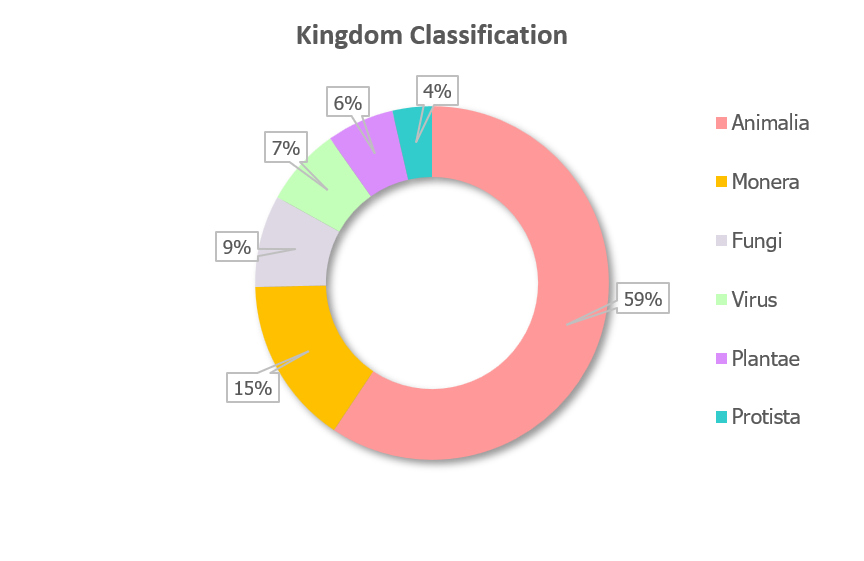
| Kingdom | Numbers |
|---|---|
| Animalia | 1,896 (1301 Homo sapiens) |
| Monera | 488 |
| Fungi | 269 |
| Virus | 229 (with 141 Virus hosts) |
| Plantae | 197 |
| Protista | 115 |
2
Protein Properties
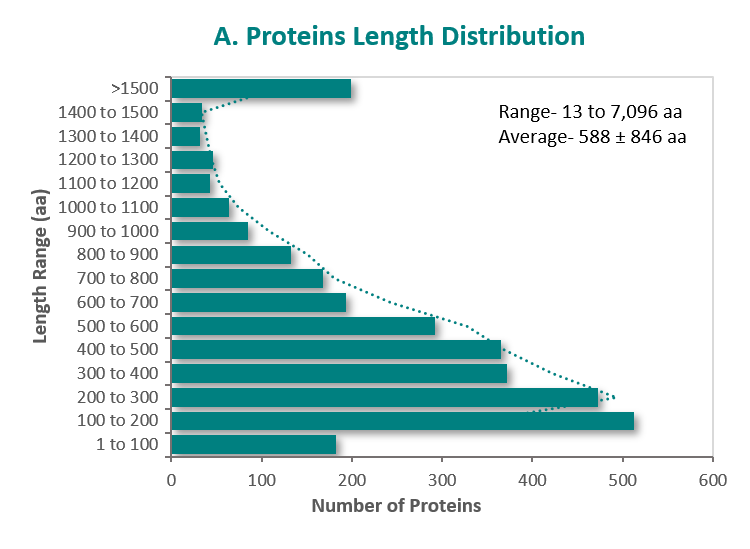
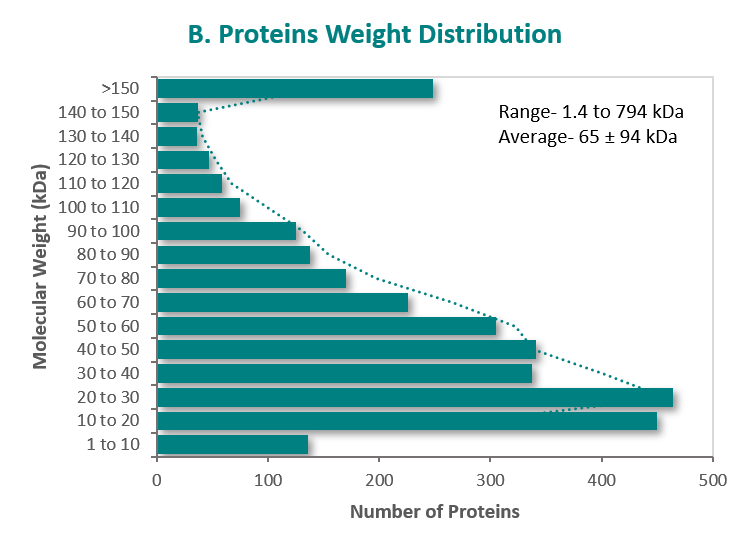
The protein sequences show substantial variation, ranging from 13 to 7,096 aa, with an average length of 588 ± 846 aa. Similarly, molecular weights range from 1,398 Da to 794,058 Da, with a mean molecular weight of 65,372 ± 93,818 Da.
3
Intrinsically Disordered Regions
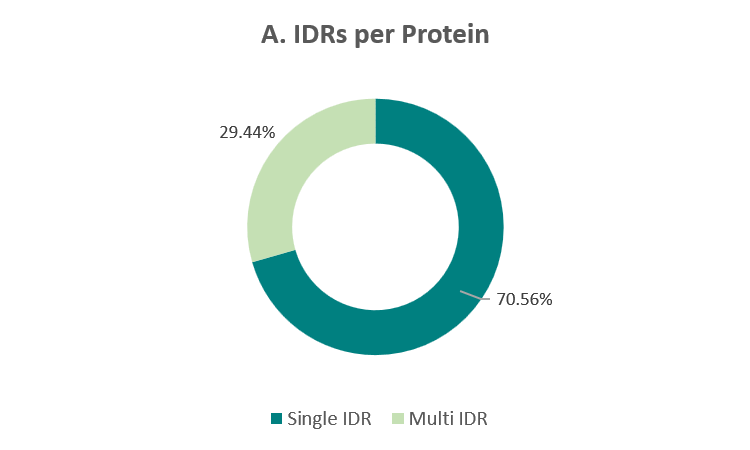
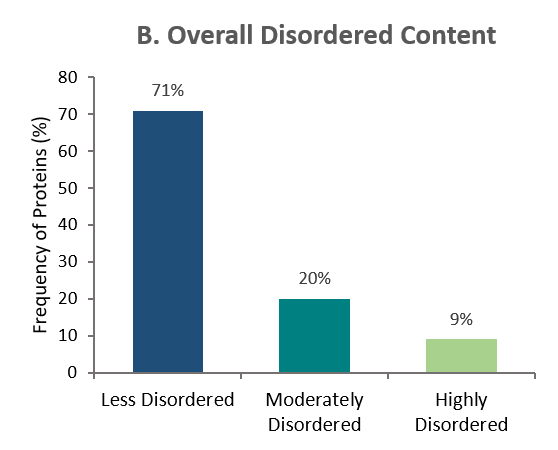
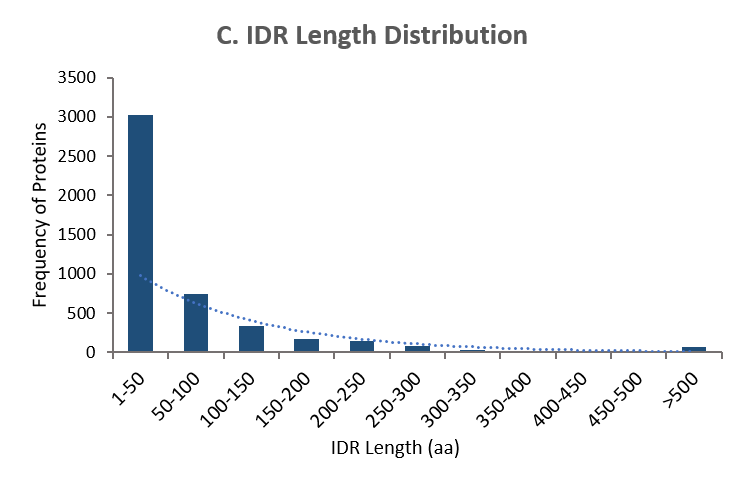
ProDI-DB contains 4,647 non-redundant IDRs, with 1 to 19 IDRs per protein. While 2254 of proteins contain a single IDR, 940 possess multiple IDRs (with a maximum of 19 IDRs per protein). The length of IDRs ranges from 5 to 2,726 aa (average 71 aa) and contributes on average 68.73% of the total disorder content.
4
Amino Acid Composition of IDRs
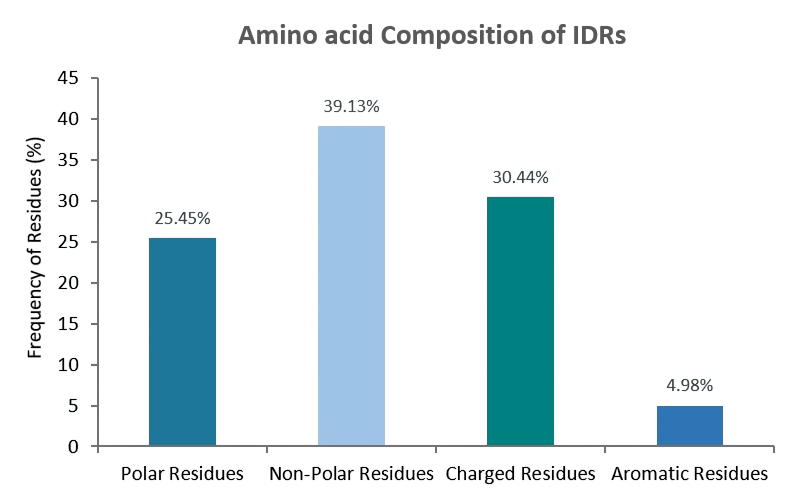
IDRs are more enriched in charged and polar residues, and depleted in aromatic content as compared to the hydrophobic residues- a major characteristic of intrinsically disordered regions.
5
Structural Representation of IDPs in ProDI-DB
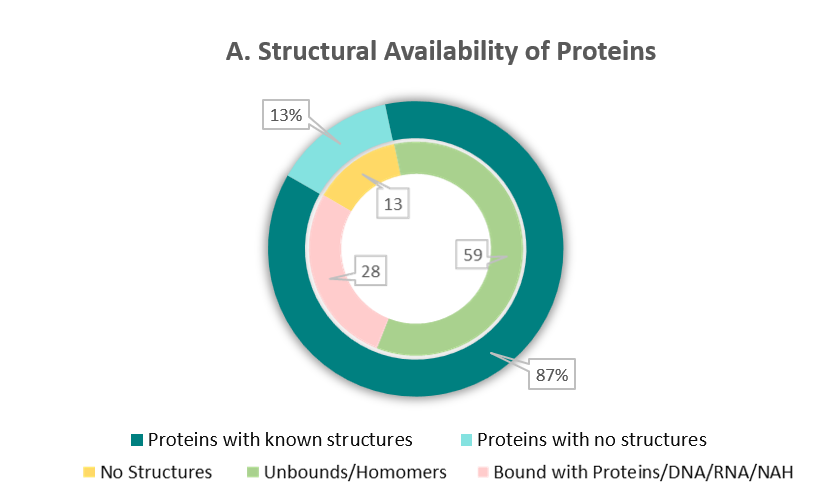
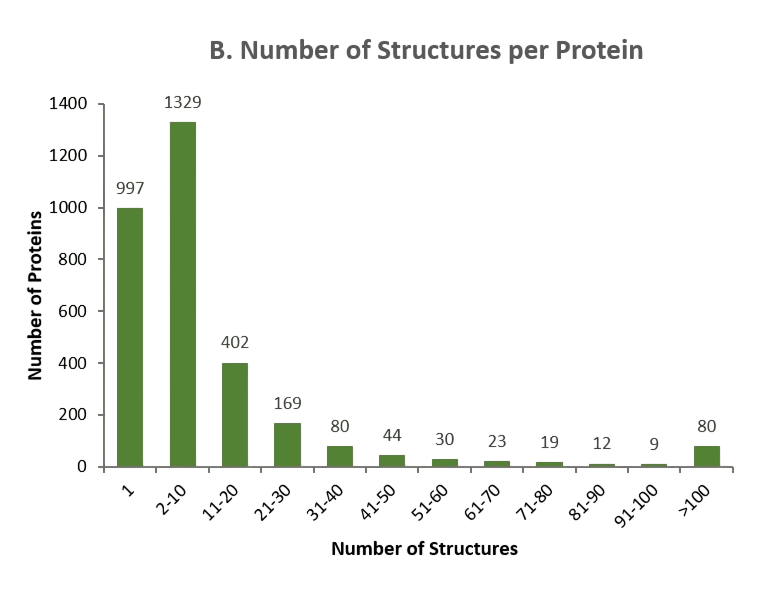
A total of 2,767 proteins (86.63%) is represented by either one or more experimentally resolved structures, while 427 proteins (13.37%) currently lack any three-dimensional structures reported in PDB. Collectively, these proteins are associated with 39,736 PDB entries.
6
Experimental Methods of Structural Determination
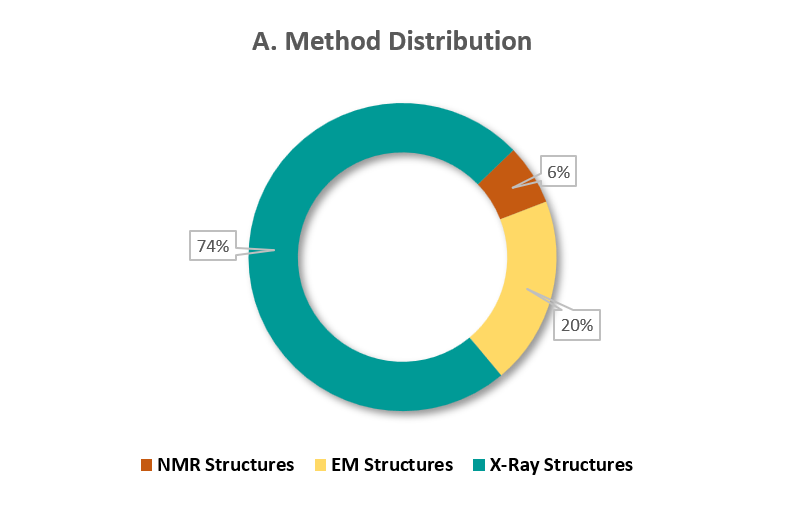
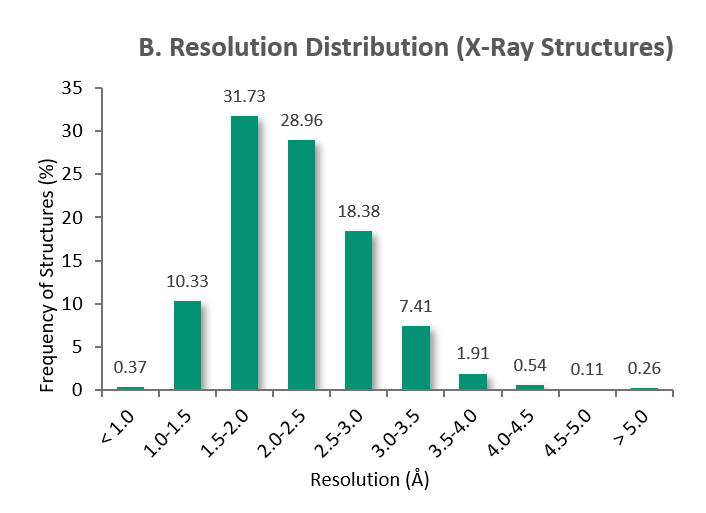
The experimentally determined structures associated with proteins in ProDI-DB are categorised into three major experimental techniques: X-ray diffraction, nuclear magnetic resonance (NMR) spectroscopy, and electron microscopy (EM). X-ray diffraction accounts for the largest proportion of available structures, followed by EM and NMR.